U.S. Senator Outlines Trump’s Long and Profitable Relationship with Russia
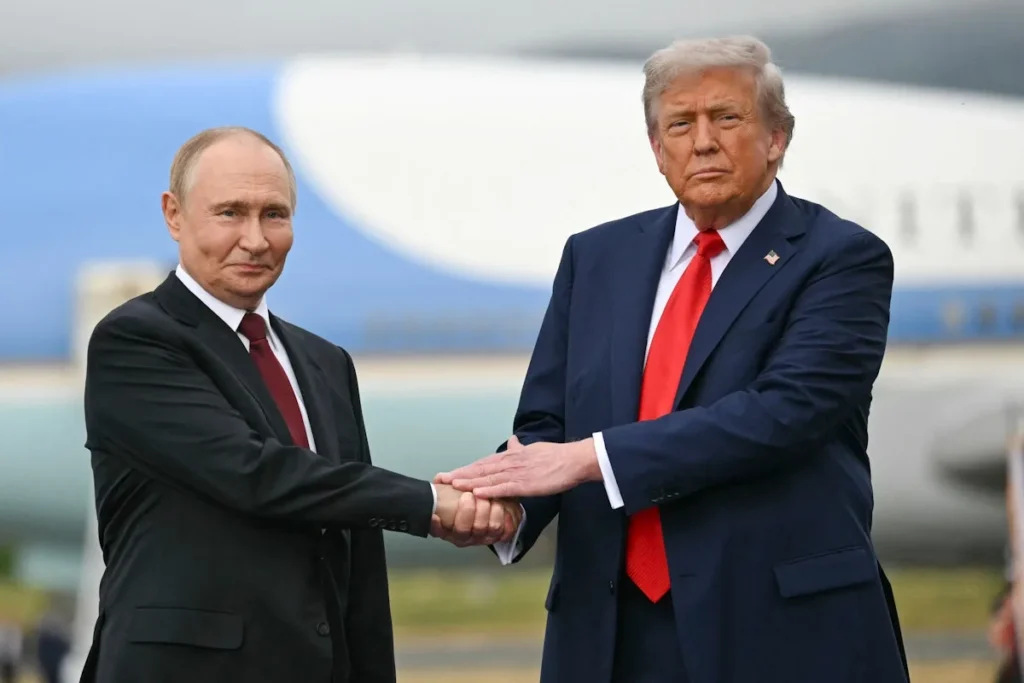
Russia is preparing to make a lot of oil and gas money as conflict in the Middle East threatens the Strait of Hormuz, one of the world’s most strategic shipping chokepoints. “We are seeing an increase in demand, a substantive increase in demand for Russian energy providers in connection with the war in Iran,” Kremlin spokesman Dmitri S. Peskov said during a Friday briefing.
The boon for the Russian economy during the country’s prolonged war with Ukraine is one of the many interesting consequences of President Donald Trump’s longstanding relationship with Russia and President Vladimir Putin. In a 45-minute speech to a largely empty chamber this week, U.S. Senator Sheldon Whitehouse (D-RI) outlined Trump’s and his administration’s numerous entanglements with Russia.
He began by mentioning former FBI Director Robert Mueller’s 2019 special report on Russian election interference related to Trump’s first presidential term. Attorney General Bill Barr issued a letter ahead of the report’s release which said the investigation found the Trump campaign did not collude to steal the 2016 election. Trump then referred to the entire investigation as a “Russian hoax.”
By the time Mueller’s report was released a month later, its message had been obscured. “The Mueller report actually concluded that the Trump campaign knew of and welcomed Russian interference and expected to benefit from it,” said Whitehouse. “That conclusion was later echoed and reinforced by an investigation led by then Chairman Marco Rubio’s Senate Intelligence Committee, a bipartisan report.” Rubio is now serving as U.S. Secretary of State.
Whitehouse outlined 10 ways the Trump administration has helped Russia recently, including pausing weapons shipments to Ukraine during key moments in the war with Russia. In July, during Russia’s worst bombing campaign up to that point, Trump paused already funded shipments of Patriot interceptors, designed to protect Ukrainian citizens.
“That same month, Trump’s Treasury Department stopped imposing new sanctions and closing sanctions loopholes, effectively allowing dummy corporations to send funds, ships and military equipment to Russia,” said Whitehouse.
He said leaked phone calls between U.S. real estate investor and Russian envoy Steve Witkoff and Putin envoy Kirill Dmitriev reveal they have worked closely behind the scenes on a Ukrainian peace deal that would benefit Russia. He mentioned that soon after Pam Bondi was appointed Attorney General, the U.S. Department of Justice shut down its anti-kleptocracy initiatives, which were focused on seizing assets from corrupt foreign officials and Russian oligarchs.
Finally, Whitehouse accused the Trump administration of paving the way for Russia’s return to global sports competitions, even with knowledge of the country’s state-backed systemic doping programs.
“If Trump were purposefully doing Russia’s bidding, it’s hard to see what he’d be doing differently,” said Whitehouse.
Jeffrey Epstein’s Role
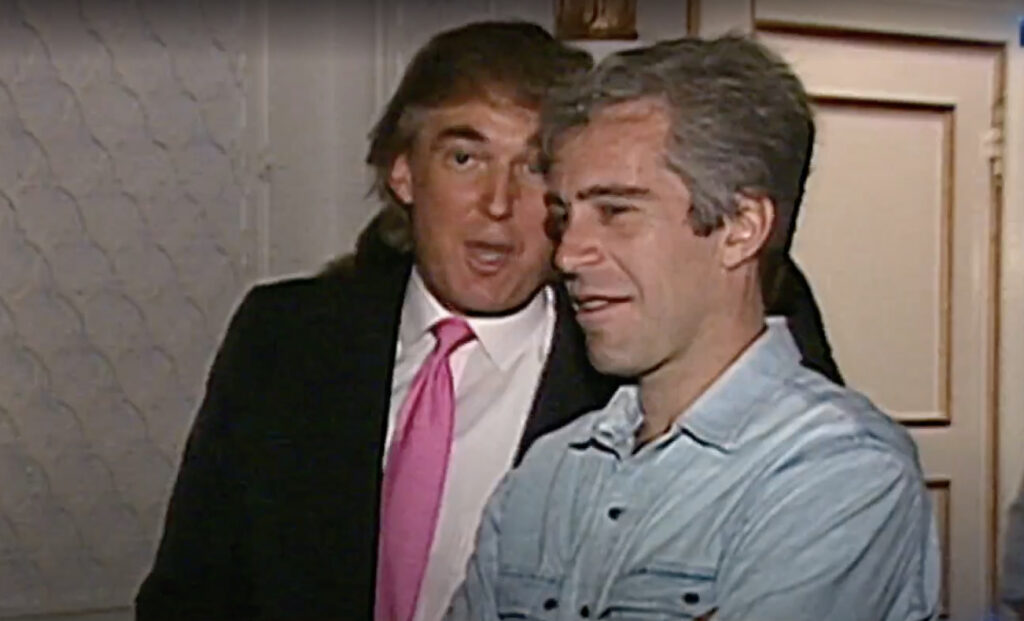
Whitehouse discussed the impact of the Epstein files and how they reveal the breadth of Epstein’s global network, which repeatedly touched Russia. Trump has called the files a “Russian hoax.”
“Epstein’s ties to foreign intelligence may never be fully known,” said Whitehouse. “It’s a murky world. He had links to officials in the United States, Russian and Israeli governments and many others.”
Epstein began his career as a high school math teacher at the elite Dalton School in Manhattan. The outgoing headmaster at the school when he was hired was Donald Barr, a former intelligence officer and Bill Barr’s father. He eventually moved on to work with British defense contractor and arms dealer Doug Leese. It was Leese who allegedly introduced Epstein to Robert Maxwell, father of his eventual girlfriend and partner Ghislaine Maxwell. Robert Maxwell had complex, shifting ties to British, Soviet and Israeli intelligence. He was initially bankrolled by Britain’s MI6 but also accepted payments from the KGB.
In a 2021 article for Rolling Stone, journalist Vicky Ward spoke to convicted fraudster Steven Hoffenberg about his relationship with Epstein. She said Hoffenberg told her that via Maxwell and Leese, Epstein was involved in something that Hoffenberg described as “national security issues.” He told Ward that this involved blackmail, influence trading and trading information at a level that is very serious and dangerous.
“Four separate sources told me on the record that Epstein’s dealings in the arms world in the 1980s had led him to work for multiple governments, including the Israelis,” wrote Ward.
It was during the 1980s that Trump and Epstein began their friendship. “They shared everything,” said author Michael Wolff, who interviewed Epstein extensively about his relationship with Trump. “They shared their airplanes. They shared women between them. They constantly shared business and financial advice.”
As Trump now infamously said in 2002, “I’ve known Jeff for 15 years. Terrific guy. He’s a lot of fun to be with. It is even said that he likes beautiful women as much as I do, and many of them are on the younger side.”
Trump and Epstein publicly fell out shortly after that. While the full story of their breakup is unknown, it was at least in part due to a 2004 bidding war for a Palm Beach mansion. Trump eventually won, purchasing the property for $41.3 million. Four years later, after modest renovations, he turned around and sold it for $95 million to billionaire Russian oligarch Dmitry Rybolovlev. At the time it was reported to be the most expensive residential property sale in U.S. history.
The oligarch never moved in.
Epstein had a well-documented history of ties to Russia, including the Russian and Eastern European models he trafficked through his global drug and sex ring. A 2017 FBI report claims Epstein was Putin’s “wealth manager.” He also claimed to have given some insight on Trump to the Russians, meeting many times with Vitaly Churkin, Russia’s UN representative from 2006 until his death in 2017.
In a 2018 email to former Norwegian prime minister Thorbjørn Jagland, who was charged with corruption last month for his ties to the disgraced pedophile, Epstein wrote, “Churkin was great. He understood Trump after our conversations. It is not complex. He must be seen to get something. It’s that simple.”